Computerized Spinal Decompression Therapy
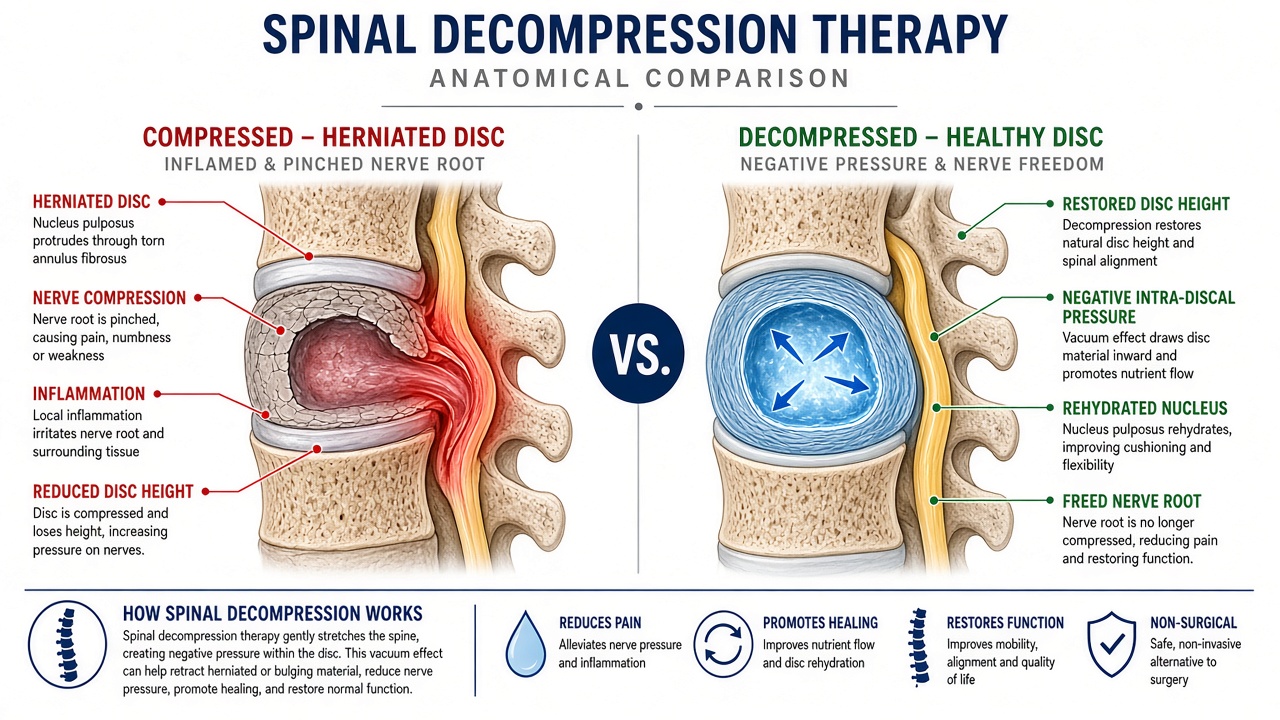
The medical alternative to spinal fusions and microdiscectomy. By generating targeted negative intra-discal vacuum pressure, computerized decompression physically retracts extruded disc herniations off pinched spinal nerves.
Positive compression forces water out of damaged discs and wedges herniated nucleus into nerves.
True negative vacuum pulls herniated jelly back into disc center and floods avascular cartilage with nutrients.
Why Ordinary Traction Fails (And Decompression Succeeds)
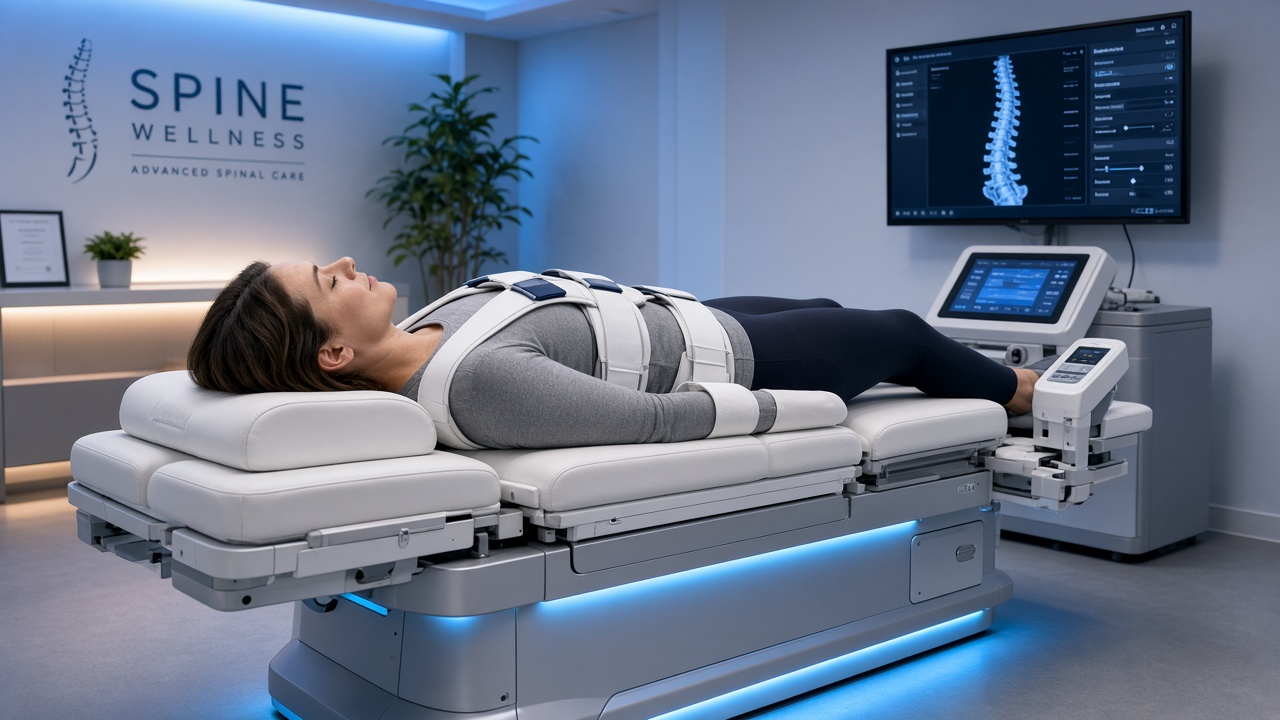
Traditional traction simply pulls the entire body in a straight line. The body detects this sudden pull and fires a protective reflex: the deep spinal paraspinal muscles go into violent contraction to protect the spine, increasing intra-discal pressure.
Computerized Decompression solves this problem with high-speed digital biofeedback sensors that monitor muscle tension hundreds of times per second. By applying tension along a gentle logarithmic curve, it tricks the body into full relaxation.
The angle of pull is precisely calibrated to isolate specific disc levels: 25°–30° for L5-S1, 15°–20° for L4-L5, or specific cervical vectors for C5-C7 disc herniations.
Orthopedic Imaging: Compressed vs. Decompressed Disc Bed